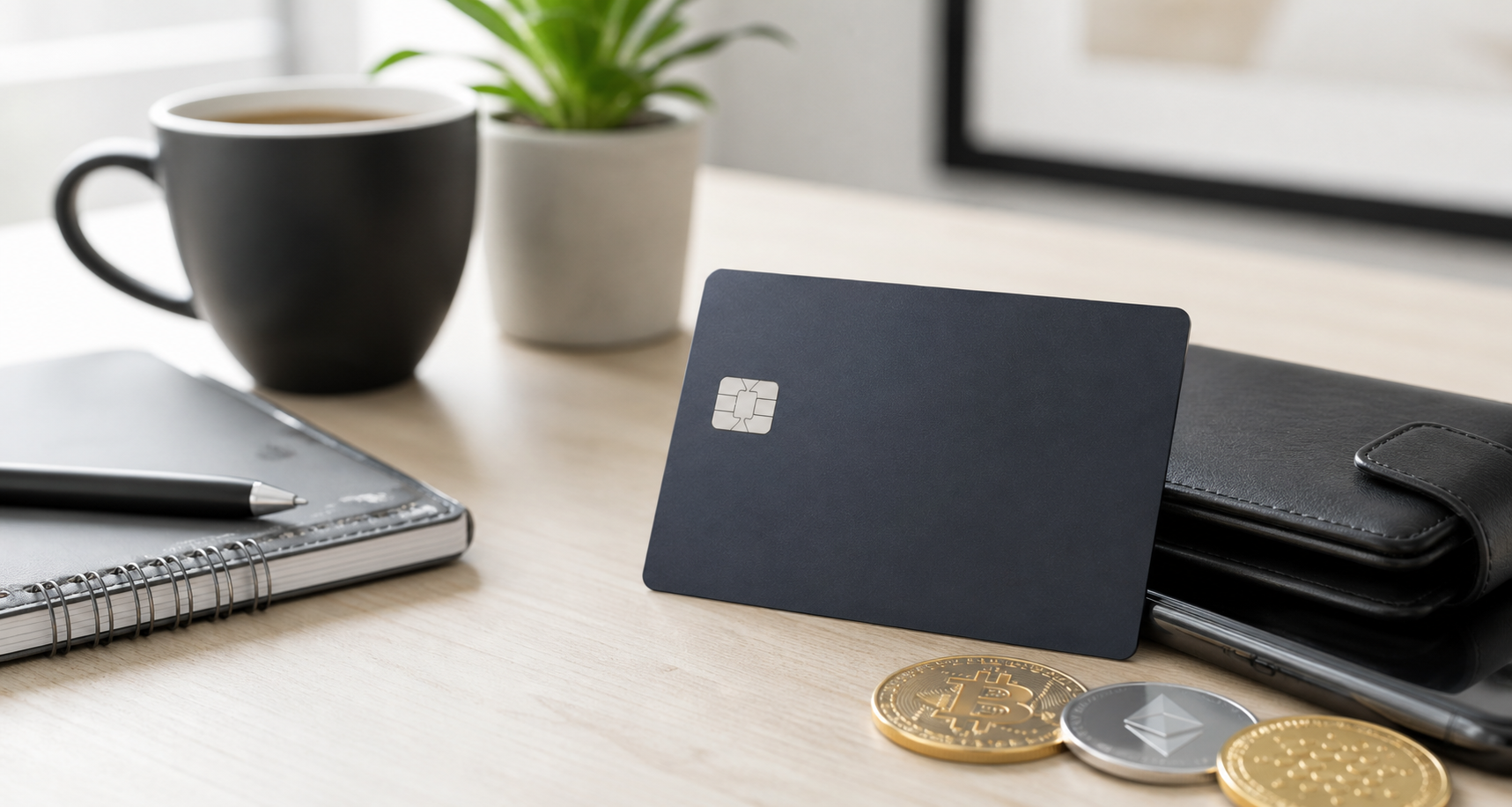
A crypto card is most useful when it works like an ordinary payment tool while keeping crypto-specific costs visible. The category now includes exchange cards, wallet-linked products, prepaid and debit-style cards, credit cards, virtual cards, and physical cards. For everyday use, the important question is not which card sounds most crypto-native; it is which one handles normal purchases with predictable costs.
Start with the spending flow
A crypto card can fund purchases in different ways. Some cards require users to top up a fiat balance. Some convert crypto at the time of spending. Others are credit products that award crypto rewards after a fiat purchase. These flows create different risks. Real-time conversion can expose the user to spread or fees. A prepaid balance can simplify budgeting. A credit product adds repayment responsibility.
Published card records show the range. Bitpanda lists 600 supported coins, no monthly fee, and 1% cashback with crypto payments. Coinbase Physical Card lists 650 supported coins and no monthly fee. Nexo card records show physical and virtual versions with up to 2% cashback. Crypto.com records include several card tiers, each with its own service, staking, rewards, and ATM details.
Fees are part of the product
Crypto card fees often appear in several places. Issuance may be free or paid. Monthly or annual service fees may be absent, optional, or tied to a plan. Top-up fees can differ by funding source. ATM costs may include a free allowance and then a percentage. Foreign exchange and crypto conversion fees can matter for travel or cross-border purchases.
A card with a high reward can still be expensive if conversion and service costs are high. A card with no monthly fee may be better for occasional users, while a higher-tier card may make sense only if the user already meets the platform’s requirements. The point is to compare net convenience, not only reward rate.
Limits should match real life
Everyday spending needs predictable limits. A card with a low single-transaction limit may fail for travel bookings or electronics. A card with a high monthly limit may still be limited by KYC level, region, or account status. Virtual cards may work quickly for online payments, while physical cards may be better for travel and stores that require contactless or chip payments.
A good card fits boring habits
The best everyday card is usually the one that makes routine payments predictable. A user who spends mostly in one currency may prefer low conversion costs over a higher reward. Someone who travels may value ATM rules and foreign exchange terms. A user who pays subscriptions may care most about virtual-card reliability. Matching the card to ordinary behavior is more useful than chasing the loudest feature.
Key takeaways
- Identify whether the card is prepaid, debit-style, or credit-based.
- Compare supported coins with actual assets you intend to use.
- Read reward terms beside top-up, conversion, service, ATM, and FX fees.
- Match virtual or physical access to your normal purchases.
- Check current availability before relying on a crypto card for daily spending.