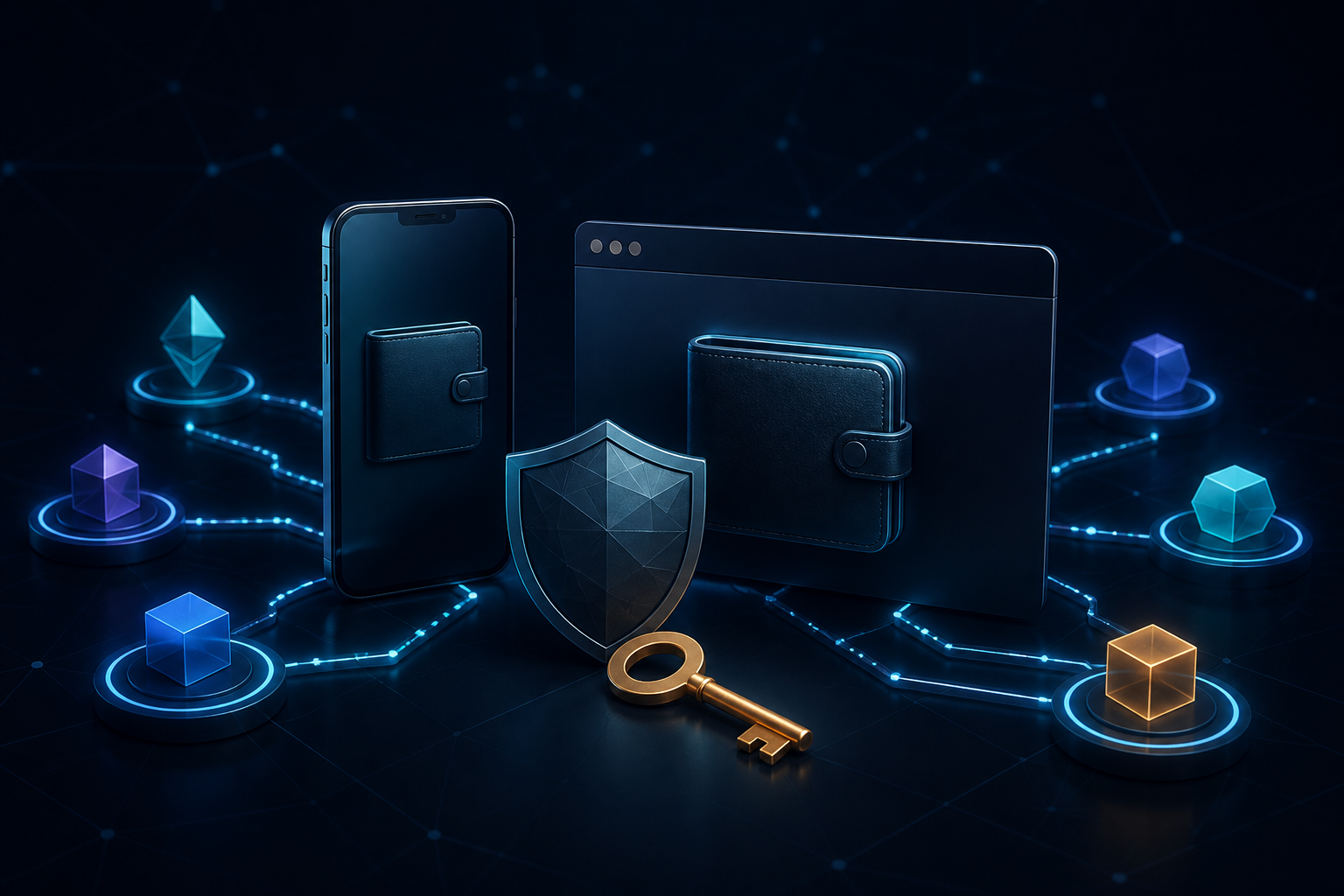
Bitget Wallet is a self-custody crypto wallet designed for people who want direct control over their assets while still having access to mobile and browser-based tools. A useful bitget wallet review should therefore look beyond the size of its token list and ask a more important question: does its feature set match the way you actually plan to hold, swap, and use crypto?
The software is available on iOS and Android, with a Chrome browser extension for desktop use. Its current profile also describes support for more than 130 mainnets and more than one million tokens. That breadth is convenient for people who move between chains, but it also makes careful routing and transaction checking more important.
What self-custody changes
With self-custody, the owner is responsible for the keys or recovery credentials that control the assets. This removes the need to depend on an exchange account for every transfer, but it does not eliminate risk. Losing a recovery phrase, approving a malicious contract, or sending assets through the wrong chain may make funds difficult or impossible to recover.
That responsibility should shape the setup process. Recovery information belongs offline in a private, durable location. It should never be entered into a website, shared with support staff, or stored in an ordinary cloud note. A strong passcode, current operating system, and cautious browser-extension habits are practical parts of asset security.
Bitget Wallet is described as an SPV wallet with hierarchical deterministic features. In everyday terms, it provides a lighter way to interact with blockchain systems without requiring someone to download and maintain a full copy of each chain. This is well suited to phones and browsers, although people still rely on the app and connected infrastructure to present accurate information.
Features that matter in daily use
The main attraction is the combination of storage and in-app activity. The wallet profile includes token swaps and access to crypto purchases, so users can perform common tasks without moving through several separate interfaces. Multi-chain support may also reduce the friction of managing assets across different ecosystems.
Convenience, however, may make the interface feel simpler than the underlying transaction. A swap can involve price impact, chain fees, routing, token approvals, and smart-contract risk. Before confirming, verify the token contract, selected network, destination, expected amount, and fee. A small test transaction is often sensible when using a new address or chain.
The large supported-token figure should not be treated as a quality guarantee for every asset. Anyone may encounter look-alike tokens, illiquid markets, or contracts with dangerous permissions. In-app search results are a starting point, not a substitute for checking an asset against an authoritative project source.
Where the wallet may fit
Bitget Wallet may suit active multi-chain participants who want self-custody on both mobile and desktop. It may also appeal to people who prefer an integrated interface for holding, buying, and swapping assets. Beginners may appreciate the unified workflow, provided they learn network basics and recovery procedures first.
It may be a weaker fit for someone who wants the simplest possible long-term cold-storage setup. Software connected to a phone or browser has a different threat model from a dedicated offline signing device. People holding significant value may choose to separate everyday funds from long-term holdings rather than keeping everything in one frequently used app.
Regional availability can also affect purchase methods and other integrated services. Before relying on a feature, check the current app version, local terms, supported payment route, and transaction details. Product capabilities can change over time.
A practical review checklist
Before making Bitget Wallet a primary tool, test it with a limited amount and review the following:
- confirm that the required network and exact token contract are supported;
- understand how recovery works before depositing funds;
- inspect every token approval and connection request;
- compare swap output, fees, and route before signing;
- keep long-term holdings separate when the risk warrants it;
- download software only from an official source and verify updates carefully.
Key takeaways
Bitget Wallet combines self-custody with broad multi-chain access, mobile apps, a browser extension, and integrated transaction tools. Those features make it a capable everyday option, but they also place key management, network selection, and contract approvals in the owner’s hands. Its strongest use case is convenience for informed multi-chain participants, while beginners should treat secure setup and small test transactions as essential steps. This review is informational and not financial advice.